If you plan to visit Spain, it helps to know what is on the table. Spanish food is simple, local and full of history. As a result, a handful of classic dishes appear almost everywhere, from tapas bars to family homes.
Spanish food and the Mediterranean diet
In 2010, UNESCO recognised the Mediterranean diet as Cultural Heritage. Other Mediterranean countries share this recognition, but Spain is a central part of it. Spanish food is largely artisanal, from farming and fishing to preparation and cooking. In addition, many people think it is a healthy way to eat.
How history shaped Spanish food
Several cultures left their mark on what Spain eats today. For example:
- First, the Romans brought olive oil and wine.
- Then Arab influence appears in gazpacho, a soup of raw vegetables, olive oil and vinegar.
- Finally, the American conquest brought potatoes, tomatoes, peppers and cocoa.
In northern Spain, cooks also often roast meat in the oven.
Tortilla de patatas: Spanish food in every bar
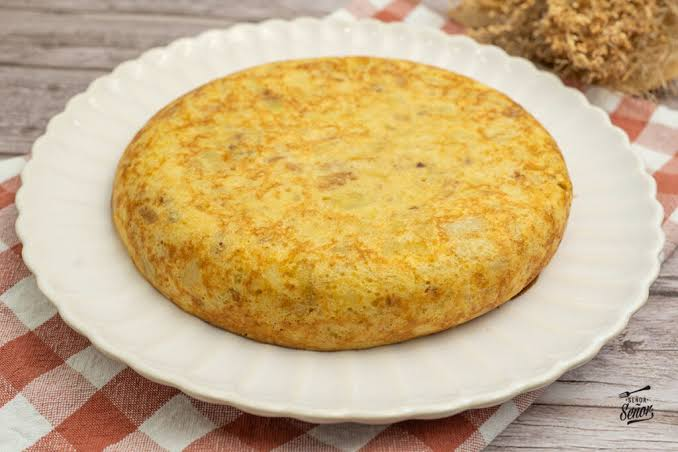
Tortilla de patatas, also called tortilla española, is a thick omelette of eggs, potatoes and olive oil. Many cooks add onion, and Spaniards often debate whether it belongs.
You will find it in bars, cafés and homes across the country. People eat it warm or at room temperature, so it works as a tapa, a snack or a simple lunch.
Jamón ibérico
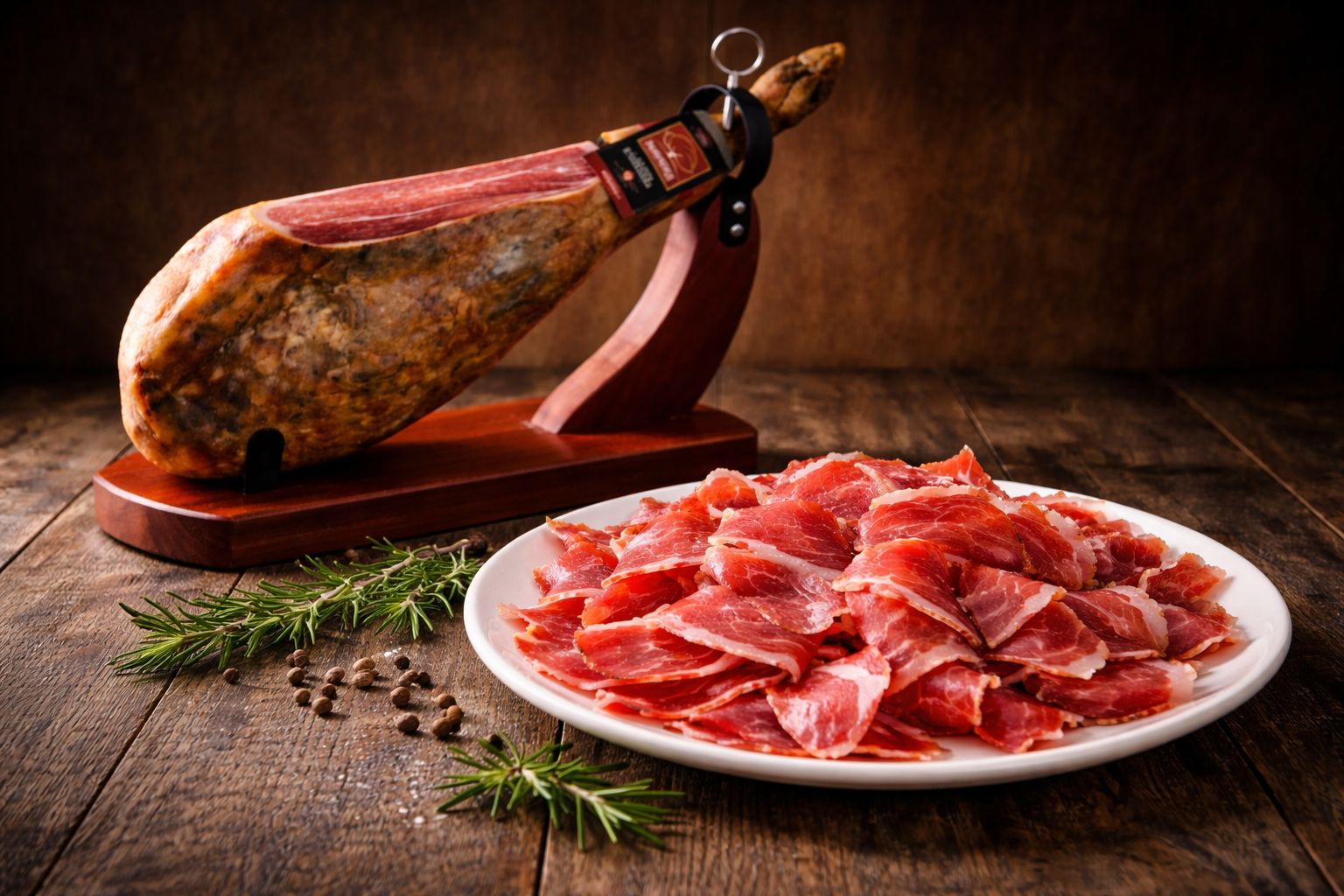
Jamón ibérico is cured ham from Iberian pigs. Cooks slice it paper-thin and serve it on its own, with bread or with Manchego cheese. In addition, you will often see whole legs hanging behind the counter in markets and restaurants.
Acorn-fed ham, called bellota, is the premium grade. Jamón serrano, however, comes from white pigs and is the more common ham.
Gazpacho
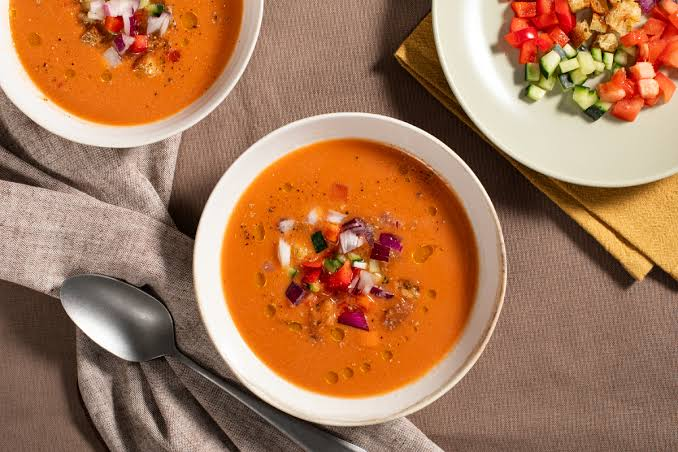
Gazpacho is a cold soup of tomatoes, peppers, cucumber, bread and olive oil. It comes from Andalusia. Because it is so refreshing, it is especially popular in the hot summer months.
Paella
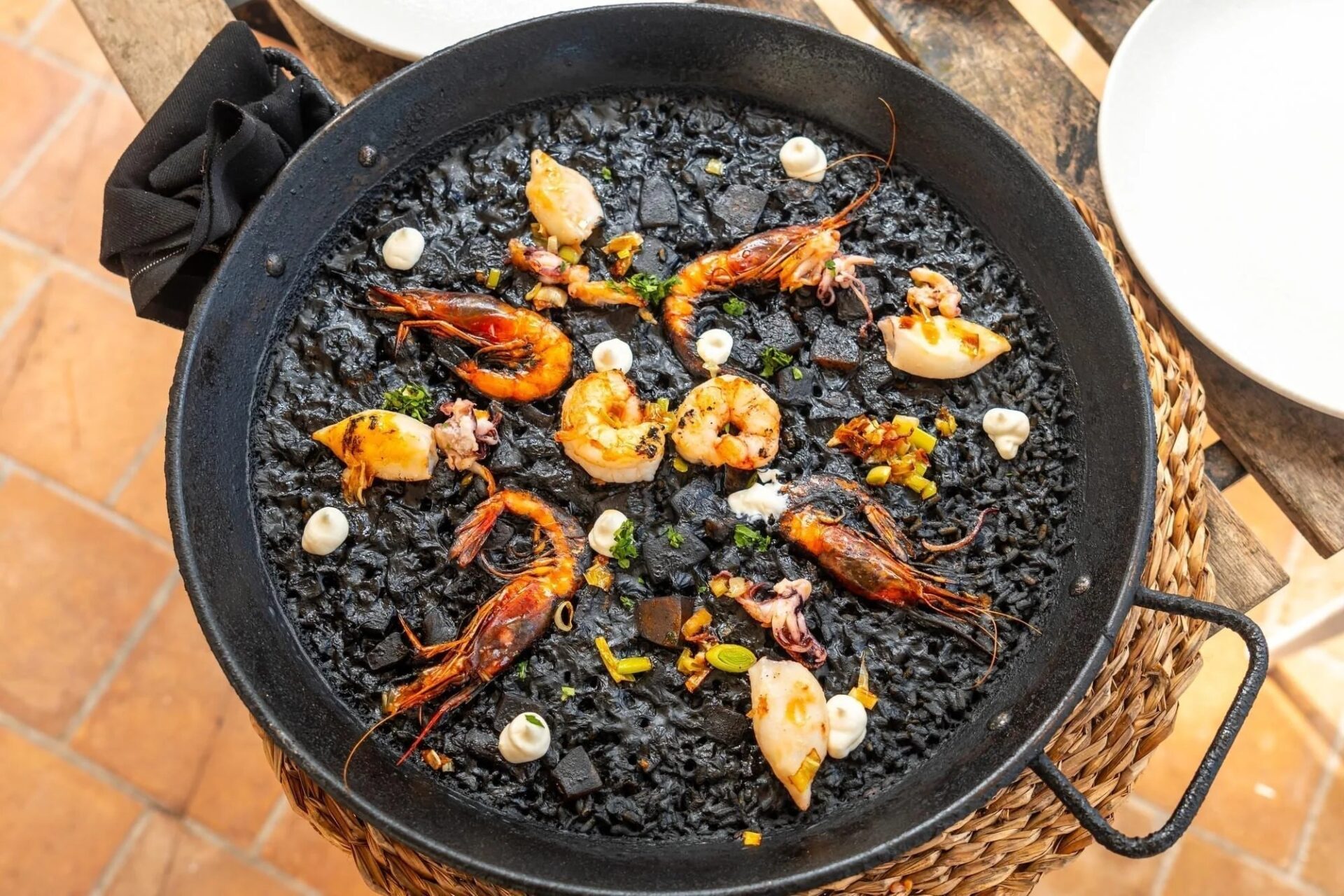
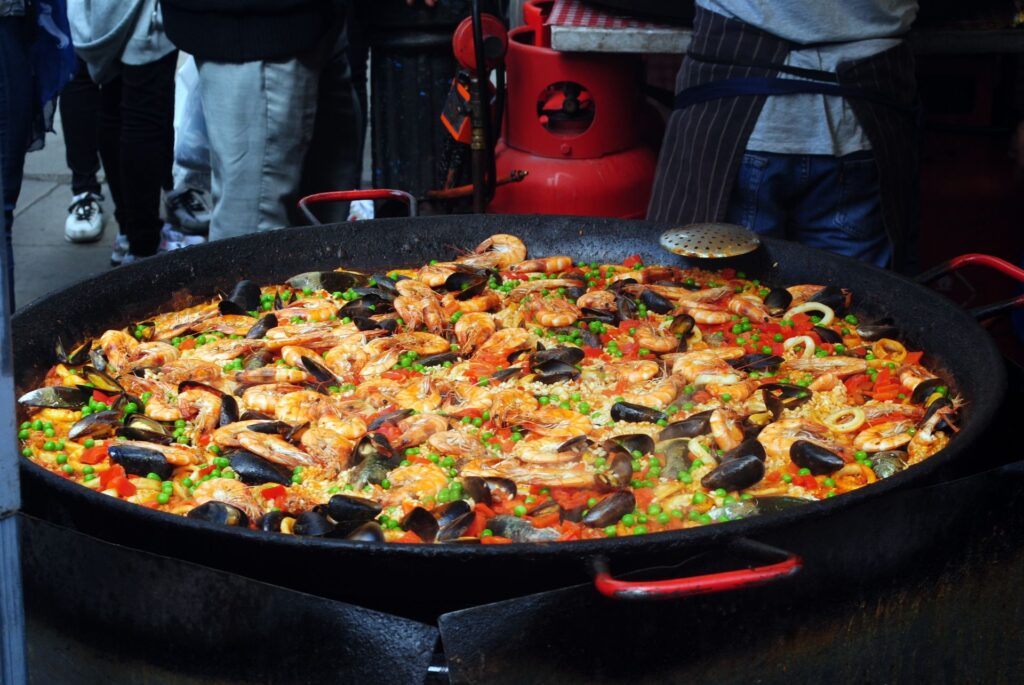
Paella comes from the Valencia region. The original Valencian recipe uses chicken and rabbit, without seafood. Mixed paella, however, combines seafood, meat and vegetables.
Many restaurants price paella per person, and some ask for at least two diners. So it pays to plan ahead for groups.
Tapas bar favourites
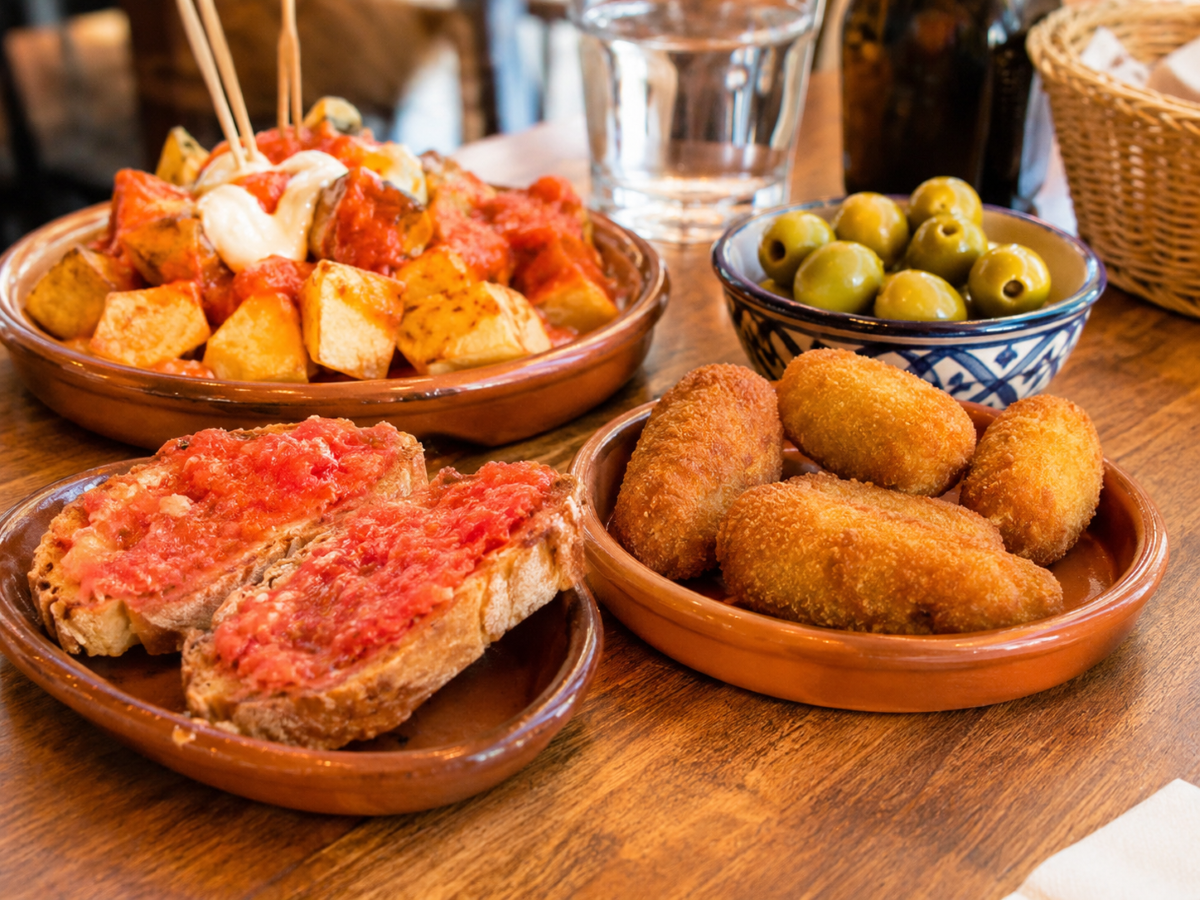
Tapas are small portions that people eat as snacks or as a full meal. Three favourites appear in almost every bar:
- Patatas bravas are fried potato cubes with a spicy sauce. The sauce changes by region. For example, Madrid uses smoked paprika, while Catalonia often adds tomato.
- Croquetas are breadcrumb-coated bites with a creamy béchamel filling. Ham and salt cod are two common versions.
- Pan con tomate is bread rubbed with tomato, olive oil and salt. It is called pa amb tomàquet in Catalonia, and many people also eat it for breakfast.
Taste Spanish food with your group
Iberinbound is an incoming DMC for Spain and Portugal. Our wine and gastronomy tours also bring these flavours into your itinerary. In addition, our city breaks and destinations give you places to build them around. Tell us your group size, dates and tastes, and we will reply within 24 hours.
Request a quote for a Spanish food tour
Frequently asked questions
Which Spanish food can you find almost everywhere?
Tortilla de patatas, jamón ibérico, gazpacho and paella are classics. Tapas such as patatas bravas, croquetas and pan con tomate also appear in most bars.
What is tortilla de patatas?
It is a thick omelette of eggs, potatoes and olive oil. Many cooks also add onion.
What is the difference between jamón ibérico and jamón serrano?
Jamón ibérico comes from Iberian pigs and is the premium option. Jamón serrano comes from white pigs and is more common.
Is paella always made with seafood?
No. The original Valencian recipe uses chicken and rabbit. Mixed paella, however, combines seafood, meat and vegetables.
What is gazpacho?
Gazpacho is a cold soup of tomatoes, peppers, cucumber, bread and olive oil. It is especially popular in summer.
Does Iberinbound organise food and wine tours?
Yes. Wine and Gastronomy Tours is one of our services. Contact our team with your group size and dates, and we will prepare a proposal.
Have another question about Spanish food? Visit our full FAQ page or contact our team, and we will reply within 24 hours.
Data: Saily, Afar, SpanishDict, The Culture Trip and Iberinbound website content, 2026.